

You might notice a bump while grooming, bathing or cuddling your pet. It may feel soft and painless, or your pet may be acting completely normally. It is natural to wonder whether it can simply be watched.
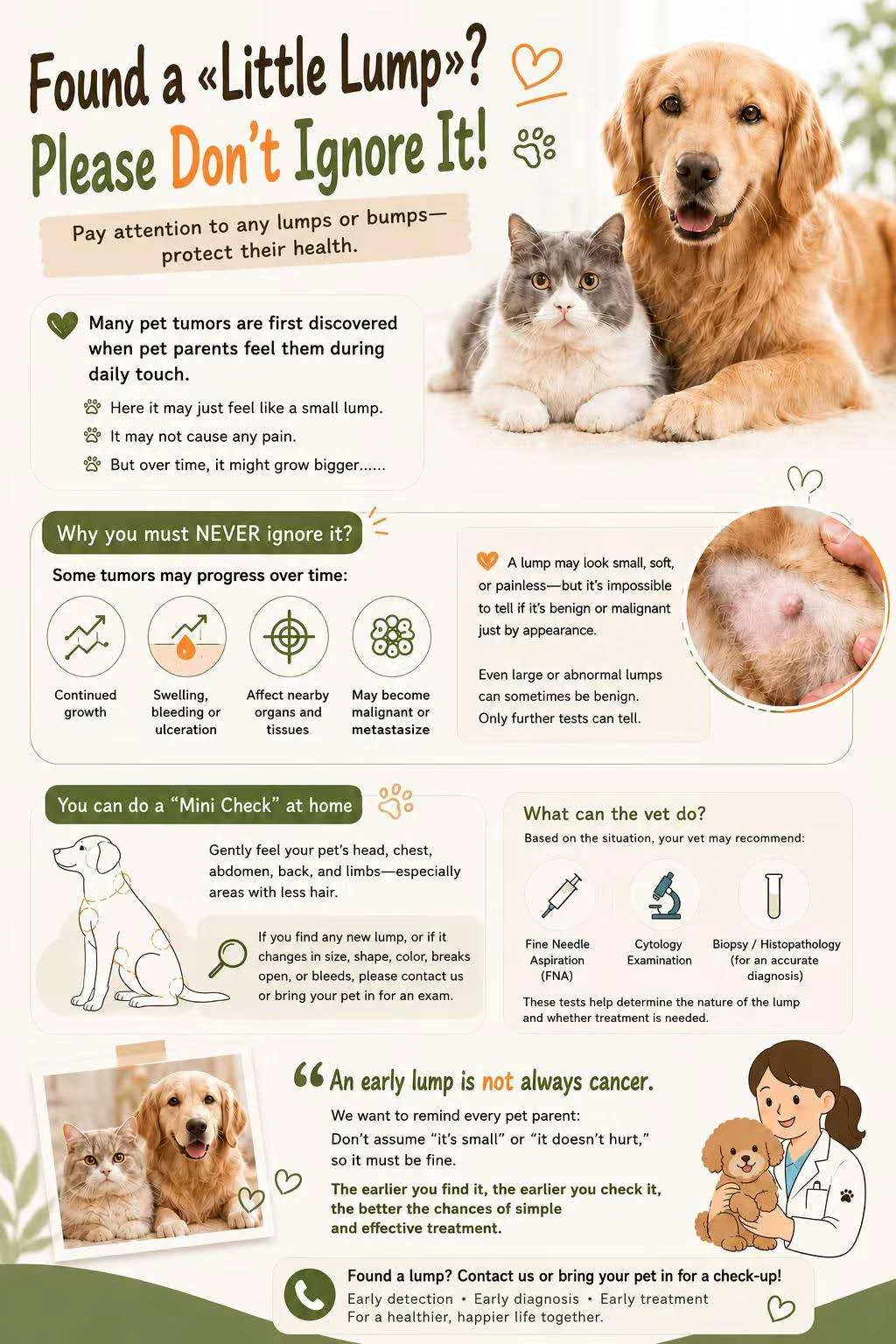
Not every lump is cancer. However, its size, softness or lack of pain cannot tell you what it is. A veterinary examination is the best starting point for deciding whether further investigation is needed.
Four changes worth noticing
A new lump
Record where it is, even if it is tiny.
A change in size or feel
Growing, firmer or differently shaped bumps deserve review.
A change to the skin
Look for redness, discharge, bleeding or an open sore.
Changes in comfort
Notice licking, limping, rubbing or interference with movement.
Make a simple lump record
A short record helps your veterinarian understand what has changed between visits.
WHERE
Note the location on your pet's body.
WHEN
Write down the date you first found it.
SIZE
Measure gently with a ruler if your pet allows.
PHOTO
Take a clear picture with a size reference.
Avoid squeezing, cutting or attempting to drain a lump at home.
What happens when the vet checks a lump?
- 1
Examination
The veterinarian checks the lump and your pet's overall health, and discusses its history.
- 2
Sampling when appropriate
Fine-needle sampling and cytology may help identify the type of tissue or cells. Some cases need a biopsy.
- 3
A plan that fits
Depending on the findings, the next step might be monitoring, further tests, removal or referral.
Common questions
Can I wait until the next vaccination visit?
Ask your vet rather than deciding on appearance alone. A newly discovered or changing lump should be assessed; rapid growth, ulceration or bleeding needs prompt advice.
Does fine-needle sampling always give a clear answer?
No. It can be highly useful, but some masses require biopsy or histopathology for a clearer diagnosis.
Will every lump need to be removed?
No. Treatment depends on the clinical findings, test results, location and your pet's overall condition.
Found something new on your pet?
Book a veterinary examination and bring any photos or measurements you have taken.
Further reading: 2026 AAHA Oncology Guidelines: Tumour Diagnostics and Staging