
Three things to know
- 01RiskUnspayed females
- 02DischargeMay be completely absent
- 03CareContact a vet promptly
Do not wait for visible discharge.
Read the full guide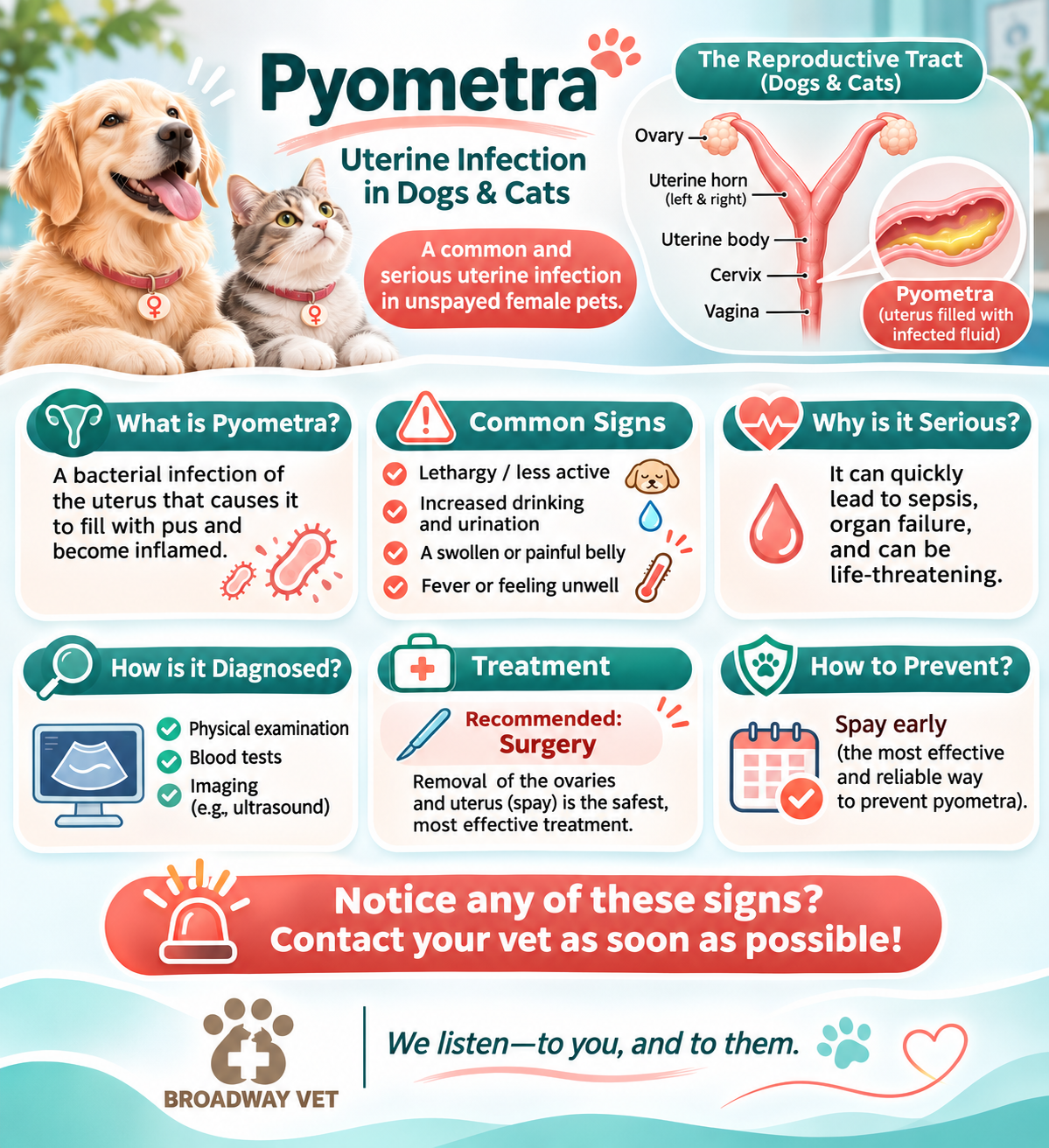
What is pyometra?
Pyometra is a bacterial infection that causes pus to collect inside the uterus. Hormonal changes after heat cycles contribute to the risk. It is more common in unspayed female dogs, particularly as they get older, but can also affect cats and younger pets.
Why does pyometra develop?
After a heat cycle, progesterone influences the uterine lining and can make it easier for infection to develop. Bacteria, commonly Escherichia coli from the pet's normal flora, may enter the uterus through the cervix. Repeated hormonal cycles can increase risk. A dog often becomes unwell several weeks after her season; in cats, the timing can differ because ovulation is commonly induced by mating.
Who is at greater risk?
Any female dog or cat with an intact uterus can develop pyometra. Risk tends to increase with age and repeated heat cycles, but young animals are not immune. Hormone-based reproductive treatments may also increase risk. The condition is more common in dogs than cats.
Warning signs
Changes may be subtle at first. Watch for:
- Lethargy or poor appetite
- Drinking and urinating more than usual
- Vomiting, a swollen abdomen or abdominal discomfort
- Pus-like or bloody discharge from the vulva
- Fever, marked weakness or collapse
Open versus closed pyometra
There are two broad presentations. Neither should be managed at home.
- Open-cervix: pus or blood-stained discharge may appear around the vulva, bedding or tail. Some pets lick frequently, so owners may not notice it.
- Closed-cervix: fluid is trapped inside the uterus, with no visible discharge. The uterus may enlarge and systemic illness can progress rapidly.
- Both forms can cause serious illness. Do not rule out pyometra simply because the abdomen looks normal or discharge is absent.
How is it diagnosed?
Your veterinarian will review the recent heat-cycle history, examine your pet and may recommend blood tests and abdominal ultrasound. X-rays or further tests can help assess the infection and your pet's general health.
What happens during the veterinary assessment?
Your vet may recommend a physical examination, hydration and cardiovascular assessment, blood count and biochemistry (including kidney function and electrolytes), and abdominal ultrasound to identify an enlarged fluid-filled uterus. An X-ray, urinalysis or additional tests may be useful depending on the case. Ultrasound findings alone must be interpreted alongside history and clinical results.
What treatment is recommended?
For most affected pets, removing the infected uterus and ovaries surgically is the recommended treatment, typically after appropriate stabilisation. IV fluids, antibiotics and pain relief may also be needed. Medical treatment is considered only in carefully selected cases because complications and recurrence are possible.
Surgery, stabilisation and other options
Surgery to remove the infected uterus and ovaries (ovariohysterectomy) is the recommended definitive treatment for most patients. Before anaesthesia, a sick pet may require intravenous fluids, antibiotics, analgesia and cardiovascular stabilisation. This is generally more complex and carries greater risk than routine elective spaying. Medical management may occasionally be considered for a carefully selected, stable breeding patient under close veterinary supervision, with a significant risk of relapse.
After surgery: what should owners expect?
Hospitalisation and recovery depend on the severity of infection and any complications. Your team may monitor temperature, pain, hydration, kidney function and appetite. At home, provide prescribed medications, prevent licking of the wound, restrict strenuous activity and attend any recommended review. Seek immediate advice if your pet collapses, vomits repeatedly, develops a swollen or painful abdomen, or has a worsening wound.
Can it be prevented?
Spaying is the most reliable way to prevent pyometra. If you are not planning to breed, discuss the appropriate timing with your veterinarian. For breeding pets, seek prompt veterinary advice if they become unwell after a heat cycle.
Frequently asked questions
Can a pet still eat and have pyometra? Yes; early symptoms can be mild. Does every affected pet have a fever? No. Can antibiotics alone cure it? They are not considered a reliable definitive treatment for most cases. Will a spayed pet get it? Complete removal of the uterus and ovaries largely prevents classic pyometra, although rare stump infections can occur if hormonally active tissue remains.
When should I contact a vet?
If your unspayed female pet becomes lethargic, drinks unusually large amounts, vomits, develops vulval discharge or seems unwell after a heat cycle, arrange urgent veterinary advice the same day. Severe weakness, collapse, a markedly swollen abdomen or repeated vomiting warrant emergency veterinary attention. Do not wait for discharge to appear.
What happens next?
- 01Notice symptoms
- 02Contact the vet
- 03Stabilise & assess
- 04Discuss surgery