

A dog or cat can keep eating and playing even when their mouth is uncomfortable. Persistent bad breath is not always just a harmless smell—it can be one of the earliest clues that something deserves attention.
A quick look at home can highlight changes, but many important dental problems are hidden under the gumline. Here is what to notice and what a veterinary dental assessment can clarify.
“They're still eating, so their teeth must be fine.”
Pets can keep eating despite dental disease or oral discomfort.Six signs to notice
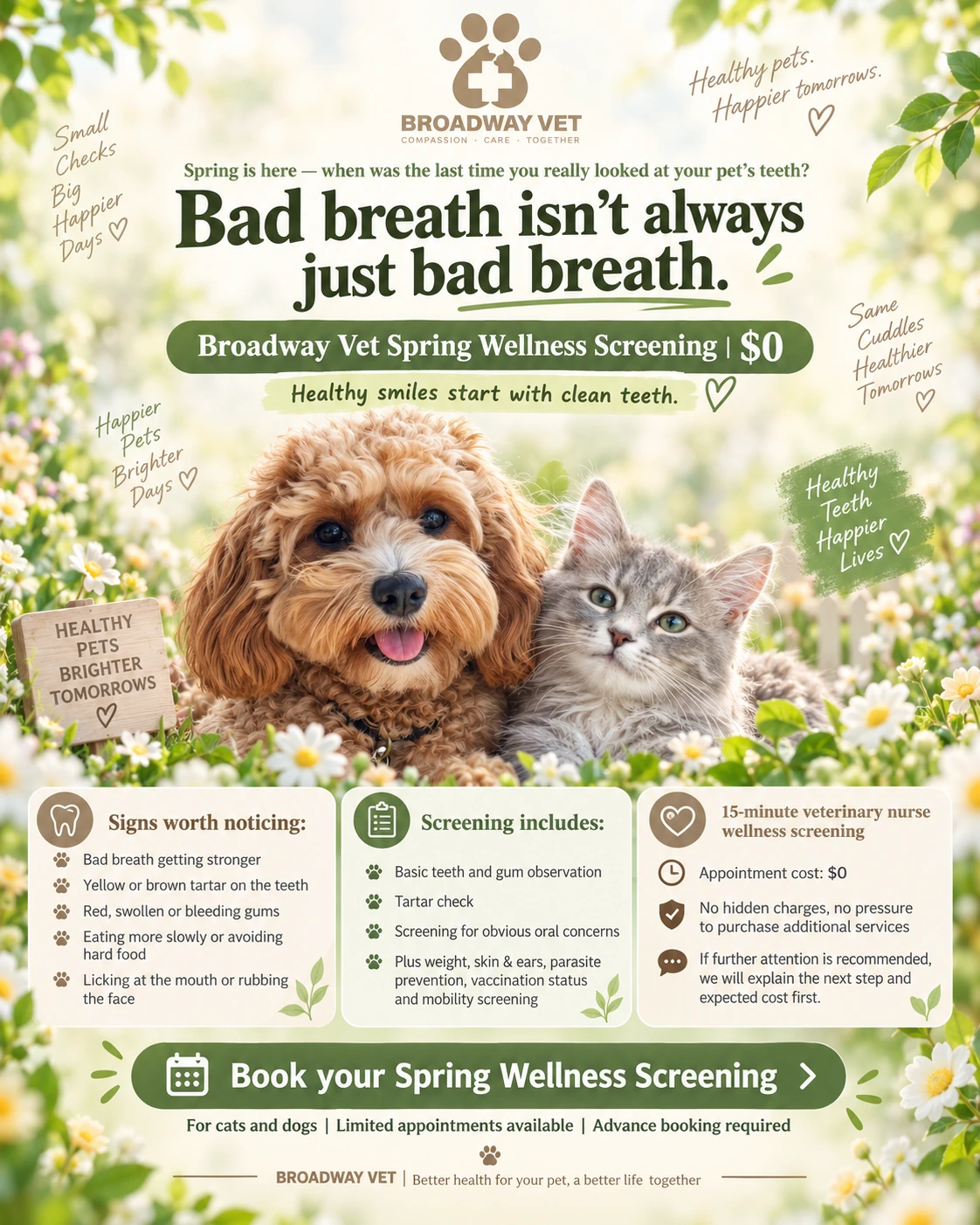
Increasing bad breath
Yellow or brown tartar
Red or bleeding gums
Chewing on one side
Dropping food or avoiding hard treats
Rubbing the face or pawing at the mouth
What a quick look can—and cannot—show
Visible signs
Tartar buildup, gum redness, broken crowns and some obvious oral changes may be seen at a conscious check.
Below the gumline
Root disease and problems beneath the gumline may require dental radiographs and a thorough examination under anaesthesia.
From first check to a treatment plan
- 1
Start with a dental check
Broadway Vet offers a complimentary initial dental check with a veterinarian for visible oral concerns.
- 2
Assess further if needed
Your vet may recommend a full dental assessment, anaesthesia and dental X-rays to see what a brief look cannot.
- 3
Discuss treatment & aftercare
Professional cleaning, extractions or other care depend on the findings. The team explains proposed treatment and costs.
Dental questions
Can I brush away hard tartar at home?
Daily toothbrushing helps prevent plaque, but established hard tartar and disease below the gumline require veterinary assessment and often professional treatment.
Does a free initial check replace dental X-rays?
No. It helps identify visible concerns, while dental radiographs may be necessary to investigate roots and structures below the gumline.
Will every pet need a tooth extraction?
No. Treatment depends on the examination, imaging findings and the health of individual teeth.
Noticed bad breath or gum changes?
Ask our team about a free initial dental check and whether further dental assessment is appropriate.
Further reading: AAHA: Dog & Cat Dental Disease—Signs and Professional Care